


Agricultural Bearings&Disc Harrow Units
HGV Bearings is a fast growing company based in China. We have over 20 years experience. We specialize in producing Flanged Disc Harrow Units, Round Bore, Square Bore, Non-standard Series,Hex Bore Series, Square Bore, and other Wheel Hub Bearings.
Why Choose Us
Our Factory
Factory 5000 Square Meters Bui, 200 Enterprise Employees,100Cooperating Partner.With strong production capacity, we can quickly produce the products you need and deliver them to you quickly.
Global Shipping
Products are sold all over the world, such as: Germany, Russia, Turkey, Iran, Vietnam, India and so on, products are widely recognized and praised.
24 Hours Online Response
Experience round-the-clock support with our 24 Hours Online Response service. We are here to answer your queries and provide timely assistance at any hour. No matter the issue you're facing, our team is available around the clock to ensure you receive prompt support.


Type of Agricultural Bearings&Disc Harrow Units
Our company provides the following products:
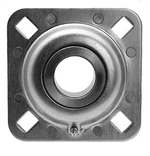
FD209 X 1-1/4 Disc Harrow Bearing
Non-Standard Series
Hex Bore Series
DISC HARROW UNIT
Advantages of Agricultural Bearings&Disc Harrow Units
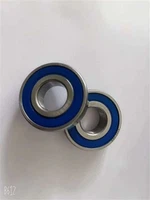
Agricultural Bearings
Reducing Friction: Bearings decrease friction between moving components, enabling seamless machinery operation and contributing to overall fuel efficiency.
Load Support: They evenly disperse heavy loads, averting excessive strain on individual parts and strengthening overall stability, thus enhancing machinery longevity.
Alignment: Bearings preserve correct alignment, ensuring that shafts and other mobile components stay in their designated places, safeguarding against premature wear and tear.
Sealing: Sealed bearings shield internal machinery components from contaminants, reducing the risk of damage caused by foreign particles and extending maintenance intervals.
Disc Harrow Units
Longer bearing life due to a superior seal performance.
Helps reduce maintenance costs.
Extended re-lubrication intervals, increasing productivity of machinery.
Easy mounting.

Sizes and Materials of Agricultural Bearings
You will find agriculture bearings in many different applications, such as balers, combine harvesters, mowers, picking machinery, rakers, and more. Though the size and shape of a bearing depend on the equipment the bearing is found in, some of the more common bearings include tapered roller bearings, angular contact ball bearings, and deep-groove ball bearings.
Spherical roller bearings typically have inner bore dimensions that range from 40 mm to 130 mm. Deep groove bearings can come with a 3 mm to 400 mm bore, and have a maximum outside diameter of 600 mm.
In addition to using special housings with seals to protect bearings from exposure to dust, moisture, chemical corrosion, and heat or cold extremes, the material construction of the bearing plays a part in reliability. Since agricultural equipment needs to avoid prolonged downtime and unexpected breakdowns, agriculture bearing material choices include:
GGB metal-polymer composite bearings
Cast iron
Pressed steel
Lubrication plays an important role in preventing deterioration and corrosion, and bearings often have a protective surface coating to minimize premature wear and tear.
Applications of Agricultural Disc Harrow Bearings
Agricultural disc harrow bearings are predominantly used in various farming applications, making them versatile components that support different types of farming equipment. Key applications include:
Soil Tillage
Essential for breaking up and aerating soil to promote better crop growth and yield.
Seedbed Preparation
Ensures smooth and even soil surfaces, which are crucial for planting seeds effectively.
Land Reclamation
Used in restoring farmland by efficiently mixing and preparing soil layers after disruption.
Weed Control
Helps in managing weeds by turning over soil, burying unwanted plants and seeds.
|
Model |
Working width ft (m) |
Power requirements |
|
1212-10 |
10'-6” (3.2) |
8 to 10 hp/ft |
|
1212-12 |
11'-10” (3.4) |
8 to 10 hp/ft |
|
1212-13 |
13'-3” (4) |
8 to 10 hp/ft |
|
1212-15 |
14'-7” (4.5) |
8 to 10 hp/ft |
Bearing Disassembly
When replacing bearings, the first step is to remove the failed bearing, and your best option is to use a puller and press. Using a bearing puller to safely pull the bearing out of the outer race minimizes damage to the shaft and housing and saves time. In addition to the puller, a separator can also be used to disassemble the bearing. The separator is designed with two plates placed behind the bearing. The bearing is pulled out by the force on the plate. If a heavy bearing needs to be disassembled, the separator can use hydraulic pressure. Auxiliary cylinder supplies power. It is not recommended to use the removed bearing again, but it is necessary to carefully inspect the removed bearing to determine the cause of the bearing failure and summarize experience to protect the bearing when it is used in the future. Some bearing damage is invisible to the naked eye and may require advanced analysis tools to determine the cause of the failure.
Bearing installation
When you need to install a new bearing, you need to handle it with special care. The first thing is to ensure that there is a clean, dry, and vibration-free storage space. Do not open the bearing package before installing the bearing. Unless the instructions require it, you should not wipe or clean it before installation. Factory prefilled with oil or grease. Before starting installation, you need to ensure that the bearing housing and shaft are clean and free of burrs. You can use emery to polish, but the particles produced by emery paper may also contaminate the bearing. It is recommended to consider using an industrial transparent polishing pad to clean the shaft and housing, and then use light engine oil. To remove moisture, the bearings must be kept clean throughout the process. When installing you need to make sure you also measure the bore and shaft to make sure they are within the recommended tolerances of the bearing and machine. It is recommended to use tools such as vernier calipers or micrometers for measurement. The amount of force you should use when installing the bearing will depend on the type and degree of fit. In many applications, such as motor shafts, the inner ring requires an interference fit, while the outer ring requires a clearance fit.
If the bearing diameter is less than 50mm and its inner ring is installed with a slight interference fit, consider using a bearing press. The driving tool consists of a solid hammer, polymer impact ring and metal tube. The tube driver is multi-purpose and can be used with Oil seals, oil seals and bushings are used together. You need to make sure you are using a safe press that is securely fastened to a sturdy workbench. A stand should be used with a long handle to provide leverage. Press the handle and use an anvil to apply pressure on the handle. Support the machine slowly.
As shown in Figure a, place the installation tool on the inner ring, and then use a press to slowly press the bearing on the shaft until the side of the inner ring touches the shaft shoulder. Do not place the installation tool on the outer ring for press fit, otherwise the bearing may be damaged. Before installation, it is recommended to apply oil on the surface of the installed shaft to facilitate smooth insertion. The installation method using a hammer is only suitable for small ball bearings with a minimum tight fit and where a press cannot be used. This method is not suitable in the case of tight interference fits or medium and large bearings.
Any time you use a hammer, you must place the installation tool on the inner ring. When both the inner and outer rings of a non-separable bearing (such as a deep groove ball bearing) require a tight fit, place the installation tool on both rings as shown in the figure. Install both rings at the same time using screws or bolts. Hydraulic Press. Because the outer rings of self-aligning ball bearings can deflect, they should always be installed using the installation tool shown in the illustration.
Place the installation tool on the inner ring, and then use a press to slowly press the bearing on the shaft until the side of the inner ring touches the shaft shoulder. Do not place the installation tool on the outer ring for press fit, otherwise the bearing may be damaged. Before installation, it is recommended to apply oil on the surface of the installed shaft to facilitate smooth insertion. The installation method using a hammer is only suitable for small ball bearings with a minimum tight fit and where a press cannot be used. This method is not suitable in the case of tight interference fits or medium and large bearings.