


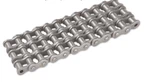
Short Pitch Precision Roller Chains
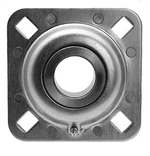
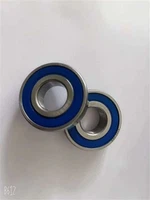
HGV Bearings is a fast growing company based in China. We have over 20 years experience. We have full range of bearings, such as deep groove ball bearnigs, taper roller bearings, pillow block bearings, spherical roller bearings, wheel hub bearings, agriculture bearings and so on. Have P0 P6 P5 three grade precision levels to meet different application enviroment.
Why Choose Us
Our Factory
Factory 5000 Square Meters Bui, 200 Enterprise Employees,100Cooperating Partner.With strong production capacity, we can quickly produce the products you need and deliver them to you quickly.
Global Shipping
Products are sold all over the world, such as: Germany, Russia, Turkey, Iran, Vietnam, India and so on, products are widely recognized and praised.
24 Hours Online Response
Experience round-the-clock support with our 24 Hours Online Response service. We are here to answer your queries and provide timely assistance at any hour. No matter the issue you're facing, our team is available around the clock to ensure you receive prompt support.


Features of Short Pitch Precision Roller Chains
High strength short pitch precision roller chain complies with ISO, DIN, ANSI and other standards. There are mainly T series high strength, ST series super strength, sht super high strength short pitch precision roller chains.
Adopt wide waist design, select high-quality materials and special heat treatment process, and the products meet the following requirements: Tensile strength: It can be increased by more than 30% compared with the minimum tensile strength of ISO standard;
Fatigue strength: It can be increased by more than 60% compared with IS0 standard fatigue strength.
Material and of Manufacturing Short Pitch Precision Roller Chains
Material
- Typically constructed from high-quality materials such as high-strength alloy steel or stainless steel.
- These materials are chosen for their excellent wear resistance, corrosion resistance, and high tensile strength.
- The use of alloy steels often includes additional elements like chromium, molybdenum, and nickel to enhance durability and strength.
- Stainless steel variants are ideal for applications where corrosion resistance is critical, such as food processing or marine environments.
Manufacturing Process and Precision
- The manufacturing process is highly refined, involving precision machining and stringent quality control to ensure tight tolerances.
- Advanced processing techniques, such as shot peening and induction hardening, may be employed to enhance the surface hardness and fatigue strength.
- The sprocket and chain plates are manufactured with high dimensional accuracy, resulting in minimal axial deviation and uniform pitch.
- Special heat treatment processes are applied to increase the tensile strength and fatigue resistance, making the chains suitable for demanding applications.

Component of Roller Chains
Outer Link Plate
Roller Chain Outer Link PlateThis is the outermost plate are combined with the pins to form what is know as a pin link or riveting link. The outer link plates take the brunt of a chains shock load. Our link hardening process is computer controlled for maximum strength. Another process the link plates go through is shot peening, which increases the fatigue strength and helps prevent cracking. Shot peening is a process of shooting little steel balls that compress the surface.
Inner Link Plate
Roller Chain Inner Link PlateInner link plates hold the bushing and the roller to form what we call a "roller link". Our inner link plates also go through the same special hardening & shot peening processes as the outer link plates.
Pin
Roller Chain PinsRoller chain pins hold the entire roller chain together by connecting roller links together. The pins are the main "bearing" point where the roller links. The bearing point is where the chain flexes/pivots when running around a sprocket. Pins are a very critical component and we use special pins with precision heat treatment for increase strength and wear resistance.
Roller
Roller Chain RollersRollers are the part that rides on the sprocket teeth. The rollers do take a moderate impact especially when the drive is initially started. The rollers are consistently contacting the sprocket teeth (metal-to-metal contact), so strength and wear resistance is needed. All Nitro roller chain uses solid rollers to prevent distortion and they also undergoes special manufacturing processes for wear resistance.
Bushing
Roller Chain BushingsThe bushing is located between the pin & roller, which takes impact loads from both sides. Bushings are also heat treated and shot peened for increased strength & fatigue resistance. Bushings are available in split or solid construction.
Our lineup of standard roller chains include the most common chain sizes and types in the industry. These chains conform to ANSI B29.1 Standards and are manufactured from high-quality carbon steel.
We typically supply #50, #60, #80 and #100 standard duty roller chains for agricultural applications. We also supply #50H, #60H, #80H and #100H heavy duty roller chains for the toughest applications that need the longest life out of their chain.
Due to the high speed nature of agriculture equipment chains, we recommend using our Heavy Duty, Solid Rollers, and Solid Bushing quality roller chains that is specifically made for high speed applications. The pins of this chain are case hardened and have the highest outside rockwell hardness across all three quality levels, along with heat-treated bushings, rollers, and side-plates. Having a harder pin will eliminate stretch for most pieces of equipment. Along with the heat treated pins, rollers, and side-plates, all heavy duty roller chains are pre-stretched at the factory. Without excessive chain stretch, you have substantially less wear on the components and the chain will last longer.
Installation of Roller Chain
Like any power transmission component, roller chain requires careful and accurate installation to ensure trouble-free operation and long life. Though roller chain installation is a fairly simple process, certain precautions must be taken and maintained in order to achieve the desired results. Required Tools: You will need an angle grinder, chain vise, punch or chain screw, hammer and either a straight edge, level or laser alignment tool.
Step 1: Grind the riveted portion of the two pins with the angle grinder (remove the cotter pins if necessary).
Step 2: Secure the chain in the chain vise. Use the primary and secondary punch (or chain screw) and remove one set of pins.
Step 3: Check both parallel shaft alignment and sprocket axial alignment using a straight edge, level or a laser alignment tool. Misalignment results in uneven loading across the width of the chain and may cause roller linkplate and sprocket tooth wear. Remember to place the sprockets as close to bearings as possible.
Step 4: Install both ends of the chain onto the sprocket and join with the connecting links, then fastened by a spring clip or cotters (it may be necessary to have assistance to support the chain as the connection is made).