

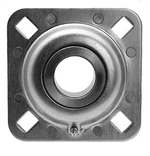
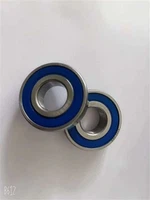

Wheel Hub&Bearings
HGV Bearings is a fast growing company based in China. We have over 20 years experience. We have full range of bearings, such as deep groove ball bearnigs, taper roller bearings, pillow block bearings, spherical roller bearings, wheel hub bearings, agriculture bearings and so on. Have P0 P6 P5 three grade precision levels to meet different application enviroment.
Why Choose Us
Our Factory
Factory 5000 Square Meters Bui, 200 Enterprise Employees,100Cooperating Partner.With strong production capacity, we can quickly produce the products you need and deliver them to you quickly.
Global Shipping
Products are sold all over the world, such as: Germany, Russia, Turkey, Iran, Vietnam, India and so on, products are widely recognized and praised.
24 Hours Online Response
Experience round-the-clock support with our 24 Hours Online Response service. We are here to answer your queries and provide timely assistance at any hour. No matter the issue you're facing, our team is available around the clock to ensure you receive prompt support.


Advantages of Wheel Hub&Bearings
Reducing Friction
Bearings Reduce Friction Between Moving Parts, Preventing Excessive Wear And Damage.
Supporting Load
Bearings Transfer The Vehicle’S Load To The Wheels, Ensuring Stability And Smooth Driving.
Maintaining Alignment
Bearings Help Keep The Wheels In The Correct Position Relative To The Vehicle’S Axle, Which Is Crucial For Proper Handling And Driving Safety.

The construction of wheel hub bearings involves materials selected for their strength, durability, and resistance to wear:
Chromium Steel: Offers superior hardness and corrosion resistance, making it ideal for high-performance bearings.
Stainless Steel: Provides excellent resistance to rust and oxidation, suitable for environments exposed to moisture and chemicals.
Polymer Composites: Used in some advanced designs to reduce weight and improve fuel efficiency.
These materials are chosen to ensure the longevity and reliability of wheel hub bearings under various driving conditions.
Application of Wheel Hub Bearings
Hub bearing is an important mechanical bearing, and its application field is very wide. First of all, automobiles are one of the main application scenarios for wheel bearings. During the driving of the car, the hub bearing supports the rotation of the wheel, ensuring the stability and driving safety of the vehicle.
The aircraft also widely uses wheel bearings as part of the flight control system to ensure the smooth flight of the aircraft. In industrial equipment, hub bearings also play an important role. For example, they are widely used in mechanical equipment, power tools and other fields, reducing friction and wear, and reducing equipment maintenance costs.
Hub bearings are also widely used in agricultural machinery, rail transportation and ships. In agricultural machinery, hub bearings support the movement of agricultural machinery and can withstand different loads and environmental conditions.
In the field of rail transit, hub bearings are used in trains, trams and other vehicles to ensure the safe and smooth operation of trains. In the ship, the hub bearing also plays an important role in the ship propulsion system, supporting the movement of the ship in the water.
Which Wheel Hub Bearing to Choose
Choosing the right wheel hub bearing depends on several key factors:
Type of vehicle
Passenger cars work best with ball bearings, while trucks and SUVs require tapered roller bearings.
Driving conditions
For driving in harsh off-road conditions, tapered roller bearings or cylindrical roller bearings are recommended as they better withstand shock loads and rough terrain.
Maintenance frequency
If minimizing maintenance frequency is a priority, ball bearings are preferable due to their longevity and ease of maintenance.
Mounting space
In cases of limited space, such as in motorcycles or small city cars, needle roller bearings are the best option.
When to Replace Wheel Hub&Bearings
Wheel bearings are a necessary component for your vehicle's hub, tire, and wheel assemblies to work correctly. A wheel bearing comes in a set of round, metal pieces known as ball bearings held together by a ring. These little pieces allow for a smooth rotation and movement of the hub assembly, which is a critical piece of your vehicle's steering system. Each wheel has its own wheel bearings, so a typical car should have four sets total. Your wheel bearings have a heavy impact on the handling of your vehicle. It would be extremely dangerous to drive with old wheel bearings, as it may cause your wheels to stop turning entirely and abruptly.
You should expect to replace wheel bearings every 85,000-100,000 miles. However, this number is only a guess, as it also depends on the quality of the bearings. Unless both bearings on all side of the wheels are overworked, there is no need to replace them all at once. You should only swap out the ones that need it.