

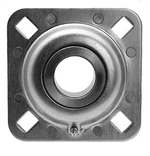
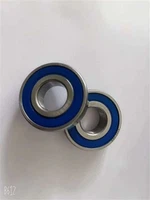

Flanged Disc Harrow Units
HGV Bearings is a fast growing company based in China. Manufacturing and Exports different types of bearings like Ball bearings ,Roller Bearings, Pillow Block Bearings, Linear Motion System,Automotive Bearings.We have over 20 years experience.We are dedicated to share the product knowledge, application expertise and consistently dependable service to our customers all the time.


Why Choose Us?
High quality
Our products are manufactured or executed to very high standards, using the finest materials and manufacturing processes.
Competitive Price
We offering a higher-quality product or service at an equivalent price. As a result we have a growing and loyal customer base.
Rich experience
Our company has many years of production work experience. The concept of customer-oriented and win-win cooperation makes the company more mature and stronger.
Global shipping
Our products support global shipping and the logistics system is complete, so our customers are all over the world.
After-sale service
Professional and thoughtful after -sales team, let you worry about us after -sales Intimate service, strong after -sales team support.
Advanced equipment
A machine, tool or instrument designed with advanced technology and functionality to perform highly specific tasks with greater precision, efficiency and reliability.
What is Flanged Disc Harrow Units?
A disc harrow is a harrow whose cutting edges are a row of concave metal discs, which may be scalloped or set at an oblique angle. It is an agricultural implement that is used to till the soil where crops are to be planted. It is also used to chop up unwanted weeds or crop residue.
Benefits of Flanged Disc Harrow Units
- Improved crop yields: By preparing the soil properly with a disc harrow, crop yields can be improved. Proper soil preparation helps to create an optimal environment for seed germination and crop growth.
- Cost-effective: It is relatively inexpensive compared to other farm implements and can be used for a variety of tasks, making them a cost-effective investment for farmers.
- Time-saving: Disc harrow can cover a large area quickly, saving time and labour for farmers.
- Versatile: It can be used on a variety of soil types and can be adjusted to different depths and angles, making them a versatile tool for farmers.
- Improves nutrient availability to feed plants.
- It shuffles the soil allowing quicker growth of any planted seeds.
- Improves the air and water absorptive capacity of soil.

According to the placements of disc groups: disc harrows can be divided into single-row disc harrows and double-row disc harrows, and double-row harrows can be divided into two types: opposed type(tandem) and offset type, according to the configuration of disc blade groups:
Single-action disc harrow
In this type of disc harrow, the disc gang breaks the soil only in one direction. They’re arranged in opposite directions, thus throwing the soil in opposite directions, creating ridges and furrows. They’re used by farmers in smaller lots as the cutting width ranges from 4 feet to 20 feet.
Double-action disc harrow
It is also called tandem disc harrow or double-action disc harrow; it consists of two or more gangs. Its front gangs throw the soil in one direction, while discs on the rear gangs throw the soil in the opposite direction.
Offset disc harrow
The disc gangs that aren't aligned with the tractor dragging it is called offset disc harrow. A double action disc harrow has two rows of disc gangs that break the soil in the opposite direction to one another. They are the largest types of disc harrows best for large fields.
According to the diameter of disc harrow blades, there are mainly the following three types:
Heavy-duty disc harrow: The diameter of the disc harrow is 660 mm. This type of disc harrow is mainly used for relatively sticky soil, and the working depth can reach 18 cm.
Light-weight disc harrow: The diameter of the harrow blade is 460 mm, which is used for sandy loam or soft soil that is not too sticky, and the working depth is about 10 cm;
Medium-sized disc harrow: The diameter of the harrow blade is 560 mm, It is generally used on ordinary soil, and its working depth is between the heavy disc harrow and the light disc harrow.
According to how the unit is connected, it can be divided into three types: trailed, mounted, and semi-mounted. In general, most heavy-duty disc harrows are trailed type, and there are also semi-mounted ones, while most light and medium-duty disc harrows are mounted type.
Application of Flanged Disc Harrow Units
Soil preparation for cultivation
One of the primary uses disc harrow is to prepare the soil for cultivation. Disc harrow it is particularly useful for breaking up clods of earth, mixing soil and plant residues and leveling the field before sowing. It is ideal for working in heavier, clayier soils that can be difficult to work with other implements.
Disc harrows they are also good for mixing organic fertilizer or compost with the soil. Thanks to this, the soil is better prepared for cultivation, because its fertility increases. Additionally, disc harrow helps to evenly distribute the fertilizer along the field, which contributes to uniform plant growth and optimal yields.
It is also worth noting that disc plate can be equipped with adjustable discs, which allows you to adjust its working depth to specific soil conditions. As a result, farmers can precisely control the soil preparation process, ensuring optimal growth conditions for plants.
Disc harrow for weed control
With the correct setting disc harrow Young weeds can be effectively removed without disturbing crops. Thanks to the appropriate selection of the working depth of the discs, the weeds are uprooted, which limits their re-growth. Thus, the harrowing process removes weeds from the field surface, which reduces their competition with crop plants for access to nutrients and water.
Mixing crop residues with the soil
Plant residues often remain in the fields after harvest, which can inhibit the growth of new crops. Disc harrow is one of the most effective tools to manage these leftovers. With properly selected settings, it can effectively crush and bury post-harvest residues, accelerating their natural decomposition process. This in turn helps to clear the field, eliminating obstacles for new crops. Shredded plant remains are gradually degraded by soil microorganisms, contributing to the enrichment of the soil with organic material.
Improvement of soil structure
Disc harrow can also be used to improve soil structure. Its action contributes to several beneficial effects that have a positive effect on crops. The first of these results is improved soil drainage. Plates disc harrow they crush and break up clods of earth, creating finer particles. As a result, they facilitate the drainage of excess water from the soil, preventing excessive moisture retention and the formation of muddy areas. Another beneficial effect is the reduction of soil compaction. Working tools penetrate the soil to a certain depth, breaking the soil crust and loosening it. This makes the soil more permeable to water, air and plant roots.

Disc:Circular concave cutting blades made of steel. It has further two types: Smooth edge disc/plain edge disc and notched edge disc/cut-away discs or scalloped edge discs.
Frame:It is used to hold and support the disc.
Arbor bolt:Heavy steel shaft to mount the disc.
Spool or spacer:Flanged tube mounted on arbour bolet between every two discs used to prevent any lateral movement of the discs and retain their fixed position. Used to keep equal spacing between the discs.
Bumper:Heavy iron plate situated at the end of each gang to counter; it protects the discs from the collision of adjacent discs.
Bearings:It assists the rotation of the gang.
Scraper:Saves disc from clogging, removes the soil from the disks, keeping the concave side of the disk clean.
Transport wheel:In some of disc harrows, transport wheels are provided for transportation purposes.
Disc gang:Assembly of disks mounted on a common arbour bolt with disc spacer, bearing, and bumper.
Weight box:Provided on the main frame of the harrow for bearing additional weight for increasing the penetration of the disc into the soil.
Process of Flanged Disc Harrow Units
Preparation
Before attaching the disc harrow to a tractor, ensure that the tractor's three-point hitch, power take-off (PTO), and hydraulic systems are in proper working order. Check the harrow for missing or damaged discs and ensure all fasteners are tight.
Attachment
Securely attach the disc harrow to the tractor's three-point hitch. Connect the PTO drive shaft if the harrow is powered, and ensure that the depth control levers are set to the desired working depth.
Adjustment
Adjust the disc angle and tilt according to the soil type and condition. Hard or dry soils may require a shallower angle, while wetter or heavier soils might require a steeper angle for more effective penetration.
Operation
Start the tractor and engage the PTO if required. Drive slowly to allow the discs to effectively cut into the soil and mix the top layers with the subsoil. Keep a steady speed to maintain uniform tillage.
Depth control
Use the tractor's hydraulic system to raise or lower the disc harrow to adjust the working depth. The depth should be consistent across the width of the harrow to ensure even tillage.
Overlapping passes
To avoid missed areas or uneven tillage, overlap passes slightly as you move across the field. This ensures that every section of soil is worked.
Field exit
At the end of a row or when turning, lift the disc harrow out of the soil to prevent gouging or damage to the implement or tractor.
Maintenance
After use, clean the disc harrow to remove any debris or caked-on soil. Inspect the discs for wear or damage and tighten any loose bolts. Store the harrow in a dry place to prevent rust and deterioration.
How to Maintain Flanged Disc Harrow Units
Always check whether the fasteners are loose before and after the operation, and whether the rotating parts are flexible;
The surface of the components of the hydraulic system should always be kept clean, and the two joint surfaces of the quick self-sealing plug should be wrapped in time after separation, so as not to be contaminated;
All moving parts should be lubricated frequently;
After a working season, the entire disc harrow should be disassembled for maintenance once, and the soil on the machine should be removed;
Disassemble the outer spherical ball bearing, replace the lubricant in the bearing, clean the outer spherical surface of the bearing and the inner surface of the bearing seat, and fill it with lubricant during assembly. After assembly, the sealing ring is not allowed to move relative to the outer ring of the bearing;
The place where the paint falls off should be filled to prevent rust;
After the disc blades are cleaned, they should be coated with antirust agent or engine oil;
Double-acting oil cylinders, hoses and quick self-sealing plugs are all disassembled, washed and maintained, and damaged parts are replaced in time, and stored in a clean and dry place indoors;
When parking, use wooden boards to pad the disc group, and apply oil to the disc blades to prevent rust. It is best to park indoors.
How Do Flanged Disc Harrow Units Work?
The working process of disc harrow is when the disc harrow is working, the cutting edge plane of the disc blade is perpendicular to the ground for operation, but the entire disc group and the forward direction of the machine have an offset angle, that is to say, the harrowing group on the same disc gang and the forward movement of the device is at an angle, but the blade plane of the harrow is perpendicular to the ground. The disc harrow advances under the action of traction. It relies on gravity to make the disc blade cut into the soil and on traction to roll forward. When the disc blades roll forward, their motion can be seen as a combination of rolling and moving.
Things to Consider When Choosing a Disc Harrow
When choosing one, you should consider the following factors:
Soil type: Different soil types require different disc harrow models. For example, if you have heavy clay soil, you may need a heavy-duty disc harrow with large blades.
Field size: The size of your field will determine the size of the disc harrow you need. A larger field requires a larger disc harrow to cover more ground in less time.
Tractor horsepower: You need to check your tractor’s horsepower before buying a disc harrow. Make sure the disc harrow you choose is compatible with the horsepower of your tractor.
Number of discs: The number of discs on the harrow will affect its cutting capacity. More discs mean faster and deeper soil penetration, but also higher cost.
Blade spacing: The spacing between the blades on the disc harrow determines the depth of penetration and the level of soil disturbance. A wider spacing is good for shallow tilling while a narrower spacing is better for deeper tillage.
Blade size: The size of the blades will also affect the level of soil disturbance. Larger blades will penetrate deeper into the soil, while smaller blades will produce finer tilth.
Bearing type: The type of bearings on the disc harrow will determine its durability and maintenance requirements. Sealed bearings are low maintenance, but may require replacement if damaged. Greasable bearings are more durable but require regular maintenance.
Transportability: If you need to move your disc harrow between fields, consider its transportability. Choose a model that can be easily hitched to your tractor and moved around.
Price: Finally, consider the price of the equipment. Choose a model that is within your budget and offers the features you need.
The plough and harrow, two crucial farming implements, facilitate the cultivation of the soil for planting crops. They both exhibit variations in their design, function, and the specific tasks they fulfil.
1) Penetration and strength
A notable difference between a disc plough and a harrow can be found in the penetration and strength of the farm implement.
Disc Plough
A disc plough is a strong farming tool used to break up and flip over the soil. It has big rotating disc blades that cut through the soil and turn it upside down. The plough’s weight and the force from the spinning discs help it to go deep into the soil.
Harrow
Harrows are not very heavy and their main job is not to dig deep into the ground. Instead, they’re better suited for tasks that happen close to the soil surface, for instance preparing the seedbed.
It even helps in making the soil even, breaking up big clumps, and getting rid of small weeds or leftover plants. Farmers often use harrows after ploughing.
2) Types of soil
Disc plough
Ploughs are often used in heavier soils like clay, where deep digging is required for breaking up compacted layers. However, ploughing sandy soils can result in soil erosion and the depletion of organic matter.
Disc harrow
Harrowing works well on different types of soil like loam, clay, and sandy soil. It’s especially helpful for lighter soils that don’t need deep digging, as that could cause erosion.
Disc Harrow Bearing Replacement
Removal of the deck: The first order of business is removing the disc harrow deck. You will likely need side cuts to remove several cotter pins in order to allow the deck to slide completely out.
Bearing blocks: This step is optional, but should be based on a determination of the condition of the blocks. If they appear to be in good shape, and move without resistance or scraping, they should be fine. If you deem that they should be replaced, be mindful to not over tighten them after replacement. If they're too tight, there is a risk of cracking the blocks.
Bearings: After you've checked (and replaced, if necessary) your blocks, it's time to remove the disc harrow bearings. There is usually a pulley on a spindle that will need to be removed after the deck has been taken off. Once this is done, the shaft should come off easily. The bearing should be fairly simple to tap out at this point. Often the end of a screwdriver can make a good "tapping tool" for this process. Once this is done, put your new bearings where the old one's were. This will be a far easier and much more inexpensive repair than if you replaced the whole spindle.
Things to remember: Take pictures of each part you take off, in the order you remove them. This makes correct re-installation easy, without any mistakes. Check here for a Big inventory of affordable, high quality bearings online.
Our Factory
HGV Bearings is a fast growing company based in China. Manufacturing and Exports different types of bearings like Ball bearings, Roller Bearings, Pillow Block Bearings, Linear Motion System, Automotive Bearings.

