


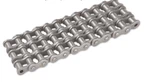
ANSI Standard Roller Chain
HGV Bearings is a fast growing company based in China. Manufacturing and Exports different types of bearings like Ball bearings ,Roller Bearings, Pillow Block Bearings, Linear Motion System,Automotive Bearings.We have over 20 years experience.We are dedicated to share the product knowledge, application expertise and consistently dependable service to our customers all the time.

Why Choose Us?
High quality
Our products are manufactured or executed to very high standards, using the finest materials and manufacturing processes.
Competitive Price
We offering a higher-quality product or service at an equivalent price. As a result we have a growing and loyal customer base.
Rich experience
Our company has many years of production work experience. The concept of customer-oriented and win-win cooperation makes the company more mature and stronger.
Global shipping
Our products support global shipping and the logistics system is complete, so our customers are all over the world.
After-sale service
Professional and thoughtful after -sales team, let you worry about us after -sales Intimate service, strong after -sales team support.
Advanced equipment
A machine, tool or instrument designed with advanced technology and functionality to perform highly specific tasks with greater precision, efficiency and reliability.
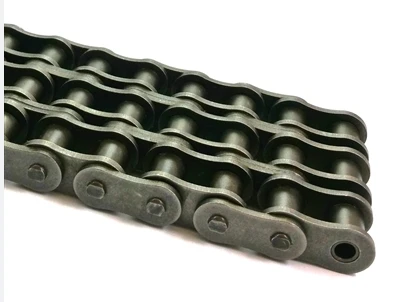
ANSI standard roller chains are the most widely used power transmission chains in the USA. A true powerhouse in precision & quality, the Nitro ANSI chains are built to handle a broad range of applications across many industries and comply to ANSI B29. 1 industry standards.
Benefits of ANSI Standard Roller Chain
High efficiency
Up to 0,98 with a properly lubricated chain under normal circumstances and with a drive working under full load..
Long wear life
15000 operating hours if the correct drive was selected and with appropriate maintenance.
Long shaft distance
The shaft distance (usually between 30 times and 50 times the pitch) has no fixed measurements. It can easily be adjusted by shortening or lengthening of the chain, even after completed assembly, in order to meet altered construction requirements.
No slip
In contrast to friction-locked drives chain drives have no slip. In motor vehicles, camshaft drives with chains guarantee exact valve timing.
High load capacity
For the permissible bearing pressure with recommended lubrication.
Elastic properties
Roller chain drives have a high elasticity, because of the plate material and the lubrication layer between rollers, pins and bushings.
Versatile applications
Roller chains are mainly used as drive elements for power transmission or as load chains; equipped with special links they can also be used for transportation and conveyance purposes. One chain is able to simultaneously drive several shafts with the same or opposite rotational direction at the same or at different speeds. It can also be employed as a rack and pinion assembly (lantern gears).
Cost effectiveness
Roller chains do not need to be pre-tensioned. Therefore there are only minor bearing loads. Space-saving construction, simple mounting, low service and maintenance costs make chain drives very economical.
Application of ANSI Standard Roller Chain
Drive chain rollers are typically smaller in diameter than the height of the chain's link plates. Thus, when the chain engages the sprockets, the link plates function as guides, and they may also serve as guides while the chain is riding on principles, as in a bucket elevator.
Conveyor chain rollers are often much more significant in diameter than the widths of their neighboring sidebars. It is done for two reasons:
The large rollers, known as carrier rollers, carry the sidebars well above the conveyor tracks, preventing friction; and
Larger rollers have a distinct mechanical advantage over smaller rollers in terms of rotational friction, assisting in reducing chain pull.
Most chains employ carrier rollers to engage the sprockets. On the other hand, carrier rollers with antifriction bearings are occasionally employed as outboard rollers on roller-less chains. Roller-less chain resembles a roller-equipped chain and is used in situations where rollers are not required.
Various varieties of roller chains are available, and all are built for a specific application. All roller chains are made with rollers equally placed along the chain. The fact that the rollers spin when they come into contact with the teeth of the sprocket is a significant benefit of the roller chain.
Components of ANSI Standard Roller Chain
Link plates
Link plates serve as the foundation of a roller chain. These flat metal plates connect various chain links together, forming a continuous loop structure. The robustness and integrity of link plates are crucial to the overall strength and performance of the chain.
Rollers
Integral to the functionality of a roller chain, rollers are cylindrical components that reside between the link plates. These rollers ensure smooth rotation and reduce friction during operation, enhancing the efficiency and lifespan of the chain.
Bushings
Bushings are cylindrical metal sleeves that accommodate the pins within the roller chain. By providing a low-friction surface for the pin rotation, bushings contribute to the overall strength and longevity of the chain.
Pins
Pins act as the primary connecting elements within a roller chain. They fit through the bushings and link plates, securing the chain's structure and allowing it to transmit power effectively. The pins play a vital role in maintaining the integrity and functionality of the chain.
Process of ANSI Standard Roller Chain
Required tools: You will need an angle grinder, chain vise, punch or chain screw, hammer and either a straight edge, level or laser alignment tool.
Grind the riveted portion of the two pins with the angle grinder (remove the cotter pins if necessary).
Secure the chain in the chain vise. Use the primary and secondary punch (or chain screw) and remove one set of pins.
Check both parallel shaft alignment and sprocket axial alignment using a straight edge, level or a laser alignment tool. Misalignment results in uneven loading across the width of the chain and may cause roller linkplate and sprocket tooth wear. Remember to place the sprockets as close to bearings as possible.
Install both ends of the chain onto the sprocket and join with the connecting links, then fastened by a spring clip or cotters (it may be necessary to have assistance to support the chain as the connection is made).
How to Maintain ANSI Standard Roller Chain
Maintaining the performance and longevity of roller chains is crucial for their efficient operation. One essential aspect of roller chain maintenance is monitoring and measuring wear and tear. This allows for timely replacements and prevents unexpected chain failures. To measure wear, start by inspecting the chain's pitch. The pitch refers to the distance between two adjacent roller pins. Use a caliper or a pitch gauge to measure this distance accurately. If the pitch exceeds the manufacturer's recommended tolerance, it indicates significant wear, and the chain should be replaced. Next, examine the roller diameter. Rollers are the components that engage with the sprocket teeth. Using a micrometer, measure the roller diameter at various points along the chain. If the diameter falls below the specified minimum, it signifies excessive wear, and the chain should be replaced promptly. Additionally, check for elongation in the chain. Over time, chains may stretch due to wear and load conditions. To measure elongation, select a specific number of links (e.g., ten) and measure the distance between them. If the distance exceeds the recommended limit, the chain has elongated, indicating the need for replacement. Regular lubrication is also vital for roller chain maintenance. Ensure the chain is properly lubricated to minimize friction and wear. Consult the manufacturer's guidelines for the appropriate lubrication frequency and the type of lubricant to use. By following these maintenance practices and monitoring wear and tear, you can extend the life of your roller chain, reduce downtime, and maintain optimal performance in your applications.
- Drives should operate under ordinary conditions. Ambient temperature should range between 15ºF and 140ºF. Atmosphere should be free of abrasive dust, corrosive gasses and high humidity.
- Sprockets should be aligned and mounted on horizontally parallel shafts.
- The suggested lubrication system and lubricant should be used.
- Drive should sustain an even load with little variation. Changing load conditions will affect the life of the chain.
- Required information when selecting a roller chain.
- Power source.
- Driven machine.
- Horsepower being transmitted.
- RPM and diameter of both the drive and driven sprockets.
- Center distances of the shafts.
- Obtain the “Service Factor” from Table I.
- Multiply the horsepower value by the service factor to obtain the design horsepower value.
- Refer to the horsepower ratings tables first on page 8 and then pages 9 to 11 to obtain the appropriate chain number and the number of teeth for the small sprocket. Refer to the number of revolutions of the high-speed shaft (the driving shaft when reducing speed, the driven shaft when speed is being increased) and the design horsepower value. Selecting a single-pitch, single strand chain will be the most economical. If single-pitch chain does not satisfy the transmission requirements, multiple strand chain can be used. Smaller pitch chains run smoother than large pitch chains.
- Determine the number of teeth of the small sprocket. The number of teeth for the large sprocket is determined by multiplying the number of teeth for the small sprocket by the speed ratio. More than 15 teeth on the small sprocket is recommended. The number of teeth on the large sprocket should be less than 120. Reducing the number of teeth on the small sprocket will reduce the number of teeth on the large sprocket.
How to Measure Chain Size
When measuring the sprocket chain size, it's best to use calipers to measure between the teeth. This technique will ensure accuracy in your measurements. Roller chains come in various sizes, thicknesses and number of strands. For that reason, it's crucial to measure so you get the correct size chain for your sprocket.
Consider the following factors when measuring your chain.
Pitch
The pitch is the measurement from the center of one pin to the center of the next on a chain. ANSI measures chain pitch in 1/8-inch increments. The pitch helps determine the overall weight and strength of your roller chain.
Plate height
Next, you'll need to measure the height of the plate. You can either measure the inside or outside of the plate — both should be the same height. If they differ, it may indicate that you have a non-standard chain, in which case you'll need to notify the manufacturer of both sizes when you place your order.
Plate thickness
When you measure the thickness of the plate, it's best to measure both the inside and outside. Some ISO and DIN roller chains have different thicknesses on the outside and inside of the plates. Heavy-duty chains will have thicker sides to increase the strength of the chain without having to go up a chain size.
Roller chain pin diameter
It's essential to measure the diameter of the pin because some roller chains use non-standard pins. This plays an important role in the chain that you choose.
Roller diameter
This measurement is the thickness of the cylinder. You'll need to slide the caliper along the sides of the roller to determine the diameter. Some roller chains actually do not have rollers. When you measure a roller-less chain, use the bushing diameter. Make sure to note that your chain is roller-less when you place your order.
Roller width
The roller is the width of the cylindrical part that lies between the two plates which the pin goes through. Use the caliper to measure the length of the caliper from both ends to get the width. If you have a roller-less chain, measure the inside width of the inner side plates.
What Are the Common Causes and Solutions for Roller Chain Failure?
Rust and corrosion
As you know, rust and corrosion can occur anytime in a machine. The roller chain can easily break if the machine catches rust and corrosion. The chains might crack at the links, which disrupts the operations. When you inspect, you will find that the arcs of the link plates are in contact with a corrosive substance.
This is one way; another is by noticing dents at the surface, which form rust on a metal surface. The red colour is a primitive way to see the rust and even kinks in the chain.
Removing the chain is one of the best ways to avoid corrosion; even proper lubrication can do wonders. But note you avoid lubricants containing water and alkalines.
Overloading
Your roller chain can only bear weight to a certain amount. Bearing high loads is another cause of roller chain failure. You will notice that when more loads are put on the chain, pinholes easily enlarge, which causes the links to tear away and break easily. Most industries consider overloading their roller chain in order to increase efficiency. You can fix the worn-out plates due to loads or replace the chain. Replacing chains can be a more durable option, so consider it.
Machines that are running at high speeds
Another reason for roller chain failure is the high speeds of machines. You can quickly identify the same with vibrations and should not ignore the sign.
The amount of vibration and wear the chain can defy relies on the length of the chain and its tension levels.
You can quickly solve the problem by adding support to the chain so it doesn't move, and your machinery will have fewer vibrations.
It may surprise many to learn that roller chain has a rich history that dates back centuries and remain relevant even in today's technological age. Chains are not just simple mechanisms; they are vital components that underpin various aspects of our lives. Consider this: the power we generate for electricity and the water we drink both rely on the use of chains. Whether it's the manufacturing of consumer goods or the handling of industrial equipment, chains play a crucial role. The story of chains begins in 225 BC with a Greek engineer named Philo the Byzantium Mechanicus, who laid the conceptual groundwork for mechanical engineering as we know it today. Fast forward to the 1500s, where the visionary inventor Leonardo da Vinci conceptualized designs featuring chains. Finally, during the Industrial Revolution in the 1800s, chains fueled the textile and weaving mills, revolutionizing power transmission from shaft to shaft. This transition from flat belt drives to cog chain systems marked a significant milestone, highlighting the unique features and benefits that chains provide.
When to Replace Your Roller Chain
- There are a few other ways besides using the chain wear gauge to know when it's time to replace a roller chain.
- When the chain elongation has reached 1.5% (this may be less when using sprockets that have more than 60 teeth) Additional note: for leaf ANSI chains this can be up to 5% in some circumstances**.
- When the link plate has some damage (cracking, distortions, etc..)
- When any other component of the roller chain has damage (cracking, distortions, irregular movement etc..)
- When the pin has bending or wrapped, or distortion of the link is found.
- When substantial rust or improper flex is found.
Manual
Apply oil using a brush or an oiling can. Oil should be added about every 8 hours or sooner if chain joints are becoming dry
Drip
Apply oil by using a leakproof oil dispenser at a rate of of 15-30 drops per minute.
Oil bath
Apply oil by an oil bath by using a leakproof case. Oil should run at the pitch line of the roller chain and should be monitored to ensure the oil stays at the pitch line. Too much oil may cause the oil to overheat.
Oil disc slinger
Apply oil using a disc slinger from a leakproof case. The oil slinger should reach rim speeds of 600 to 8,000 ft/min. Two oil slingers (One on each side) must be used if the chain is wider than 4.92". (One slinger may on wide chains may not "sling" oil across the entire chain)
Pump
Apply oil using a pump from a leakproof case. The oil stream from the pump should cover the entire width of the chain.
Our Factory
HGV Bearings is a fast growing company based in China. Manufacturing and Exports different types of bearings like Ball bearings, Roller Bearings, Pillow Block Bearings, Linear Motion System, Automotive Bearings.

