

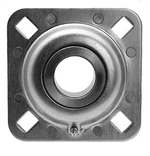

Pillow Block Bearings without Seat
HGV Bearings is a fast growing company based in China. Manufacturing and Exports different types of bearings like Ball bearings ,Roller Bearings, Pillow Block Bearings, Linear Motion System,Automotive Bearings.We have over 20 years experience.We are dedicated to share the product knowledge, application expertise and consistently dependable service to our customers all the time.
Rich Experience
HGV Bearings is a fast growing company based in China. We have over 20 years experience.
Wide Range of Products
Manufacturing and Exports different types of bearings like Ball bearings, Roller Bearings, Pillow Block Bearings, Linear Motion System,Automotive Bearings.
Quality Control
We are dedicated to share the product knowledge, application expertise and consistently dependable service to our customers all the time.


What Is Pillow Block Bearing Without Seat
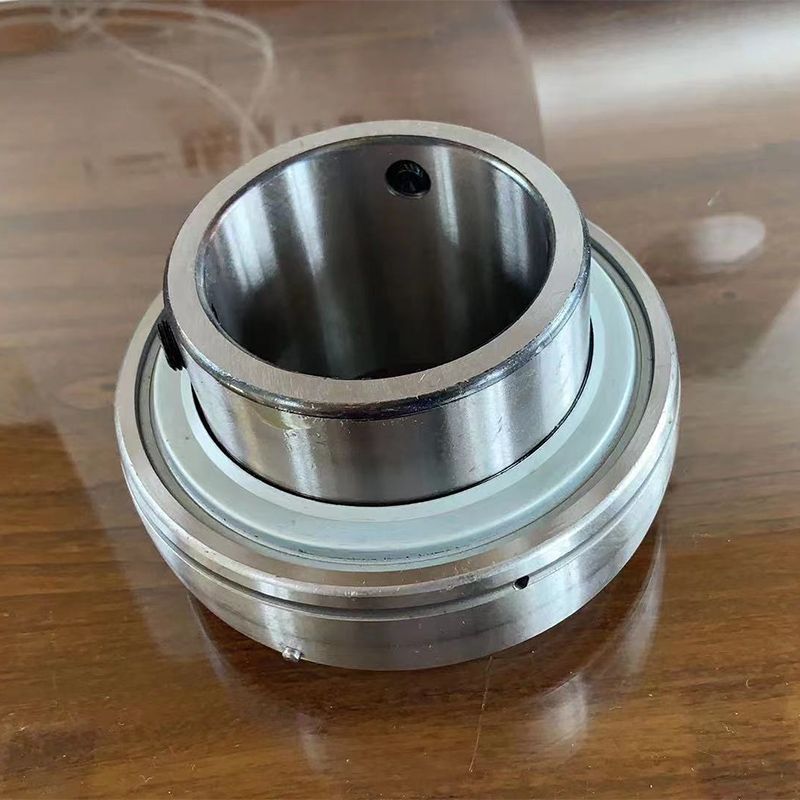
Pillow block bearing without seats are wear-resistant bearings contained within a solid cast iron, ductile iron or cast steel housing unit, also known as pillow block bearing without seat units, which means they are self-contained, lubricated, sealed and can be installed in equipment superior.
Mounted bearings are usually bolted to the surface so that the connected shaft is parallel to the surface. There are two types of bearing seats for pillow block bearing without seats: Integral bearing seats and split bearing seats. Solid pillow block bearing without seat is a one-piece bearing seat, while split pillow block bearing without seat is a two-piece bearing seat. The connection device can be a set screw, eccentric lock, single or double set ring, concentric lock or tapered adapter.
Advantages of Pillow Block Bearing Without Seats
Ease of installation
Pillow blocks are designed for easy installation and maintenance. They come with pre-drilled holes for mounting, simplifying the setup process.
Versatility
These units are available in a wide range of sizes and materials, making them suitable for various applications, from light-duty to heavy-duty machinery.
Cost-effective
Pillow block bearings are generally more affordable than other bearing types, making them a popular choice for budget-conscious operations.
Alignment flexibility
They offer some degree of self-alignment, which can accommodate minor misalignments in the shaft.
While available in different styles, they all feature an enclosed bearing in the center. As previously mentioned, the bearing is designed to accommodate a rotating shaft.
The bearing in the center of a pillow block bearing without seat typically has a smaller diameter than that of the rotating shaft with which it's used. It's not a substantial difference in size. Rather, the bearing diameter might be just 0.025 millimeters smaller. Because it's smaller, though, the bearing allows for a tight fit. The rotating shaft will fit snugly in the bearing.
How Do You Adjust a Pillow Block Bearing Without Seat
Pillow block bearing without seats have an adjustable inside diameter which allows engineers to reduce the lash, or play, which is of course the clearance between the shaft and the bearing.
Adjustments to the inside diameter could not be easier. Simply find the adjustment screw and use a hex/allen key to loosen it. Make sure the pillow block is mounted to the shaft (you can check this because it will rotate easily on the shaft) and tighten the adjusting screw gradually until the linear bearing just starts to grip the shaft.
● Avoid over-tightening
Stop tightening the adjustment screw as soon as you feel a slight increase in force when rotating. This indicates zero play (near frictionless movement) or slight preload (the force acting on the rolling elements) to minimise ball skidding and reduce axial play.
Ideally, you want to be able to move the linear bearing along the shaft without roughness and rotate it without drag, using only light pressure.
● The dangers of high preload
If you find you can't move the bearing using only light pressure, then the preload is too high. It is important to avoid excessive preload because this will cause rough operation, can shorten the lifecycle of the linear bearing and may lead to damage to the bearing or shaft.
Split or solid housing
The choice between split and solid housing depends on factors such as ease of maintenance, accessibility, and load requirements. Solid housings are made to slip onto a shaft and lock into place. This may be preferred for smaller shafts, or when you must use a certain seal style. Split pillow block housings are two pieces, consisting of a base (or saddle) and a cap. This is beneficial for large shafts and heavy machinery.
Shaft size
Selecting the right pillow block bearing without seat requires careful consideration of the shaft size. If you have a large shaft the pillow block is likely what you need. Different manufacturers make their mounted bearings in different sizes (min and max shaft sizes for instance). But in general, mounted ball bearings accommodate shaft sizes up to about 4 inches. Mounted roller bearing units accommodate shafts up to about 7 inches. On the other hand, blocks are readily available for shaft sizes up to about 12 inches (and can be specially ordered even larger).
Axial & radial load
Understanding the magnitude and direction of the loads your application will encounter is crucial. Pillow blocks can accommodate the heaviest of both axial (force being applied in the same direction as the shaft) and radial (force being applied perpendicular to the shaft) loads. Heavy loads require heavy machinery (like larger shafts and bearings). The largest mounted ball-bearing pillow blocks have dynamic load ratings near 30,000 lbs. Mounted spherical units top out in the 85,000 lbs. Range.
Speed
Different applications require varying speeds, and selecting the appropriate bearing with the right speed rating is vital to prevent premature wear and failure. Blocks are made for heavy loads, not super high speeds. The load capacity of the pillow block will beat ball-bearing options.
This doesn't exactly mean that pillow blocks are "slow", it just means that (in general) when compared to a ball bearing of a similar size, its maximum speed will be lower. However, have the unique ability to be set up with oil instead of grease which allows them to run faster than grease-only roller units versus solid or one-piece housings.
Environment
The operating environment can greatly impact the performance and longevity of pillow block bearing without seats. Blocks are built to endure harsh environments! Bearings are often used in challenging environments because of options regarding lubrication methods and seals, paired with tough housings. With the split design, lubricants can be checked and maintained more easily than with one-piece units. This keeps the bearing protected from particulates and moisture. These features give the split pillow block bearing without seat a long service life.
Lubrication
Proper lubrication is essential for minimizing friction, reducing heat, and extending the lifespan of pillow block bearing without seats. Blocks have more options for lubrication! An block has an oil sump which allows for the use of oil instead of grease.
Types of Pillow Block Bearing Without Seat
There are several types of pillow block bearing without seats available, each with their own unique set of features and benefits. These include:
Split pillow block bearings
These bearings are designed with a split housing, which allows for easy installation and removal of the insert bearing. This makes them a convenient option for applications where the bearing needs to be frequently accessed or replaced.
01
Flange pillow block bearings
These bearings have a flange on the bottom of the housing, which provides added support and stability. They are often used in applications where the shaft is subject to heavy loads or vibration.
02
Take-up pillow block bearings
These bearings are typically used in conveyor systems, and have a special locking mechanism that allows for easy adjustment of the conveyor belt tension.
03
Eccentric locking collar pillow block bearings
These bearings have a special collar that can be adjusted to provide a tighter fit on the shaft, which helps to reduce the risk of shaft movement or misalignment.
04
Set screw pillow block bearings
These bearings are designed with set screws that can be tightened to provide a secure fit on the shaft. They are typically used in applications where the shaft is subject to heavy loads or vibration.
05
Gather all the necessary tools and equipment for the installation process. You will need a torque wrench, lubricant, mounting bolts, and a clean cloth for wiping surfaces.
Begin by preparing the mounting surface. Ensure that it is clean, smooth, and free from any debris or contaminants. Any irregularities on the mounting surface can lead to misalignment and premature bearing failure.
Carefully inspect the "type E" pillow block bearing without seat and shaft for any signs of damage or wear. Replace any damaged components before proceeding with the installation.
Apply a thin layer of lubricant to the shaft to facilitate smooth insertion of the bearing. Make sure to use a lubricant that is compatible with the bearing material and operating conditions. If you are unsure what lubricant to use, our team would love to help.
Carefully position the pillow block bearing without seat on the shaft, ensuring that it is aligned correctly with the mounting surface. Use a level to verify that the bearing is installed perpendicular to the shaft.
Once the bearing is properly aligned, secure it in place using the mounting bolts. When you tighten the mounting bolts, there is a risk of uneven pressure being applied to the bearing housing. This can lead to warping of the housing. Tighten the bolts gradually and evenly in a crisscross pattern to prevent.
Check the alignment of the bearing again after tightening the mounting bolts. Make any necessary adjustments to ensure proper alignment and minimize stress on the bearing.
After the bearing is securely mounted, apply a final layer of lubricant to the bearing housing to protect against corrosion and promote smooth operation.
Perform a visual inspection to ensure that it is properly seated and secure. Check for any signs of misalignment or irregularities that may indicate installation errors.
How Much Grease to Put in a Pillow Block Bearing Without Seat
Pillow block bearing without seats are important components in machinery, ensuring smooth operation and minimizing friction. However, having the correct amount of grease is essential for their optimal performance and longevity.
Before adding grease to the bearing or its housing, it is crucial to figure out the type of grease already present. This step ensures compatibility and prevents potential issues arising from mixing incompatible greases, which could compromise lubrication and lead to premature bearing failure.
In different industrial sectors, a prevalent practice involves injecting two shots of grease into the bearing housing without evacuating the drain port or removing dried grease residue. This approach allows replenishment of the grease supply while minimizing downtime associated with extensive cleaning.
However, continual monitoring of grease condition is essential, as periodic assessment for thorough cleaning and regreasing may be necessary to uphold optimal performance and extend bearing longevity.
A common rule of thumb for pillow block bearing without seats is filling the housing from one third to two thirds full of grease, depending the speed and temperature. To ensure thorough lubrication, completely pack grease between and around all rolling elements and the cage assembly.
A widely used formula for calculating the required grease quantity (in grams) for a particular bearing based on its width (B) and outside diameter (D) in millimeters is:
G = 0.005 × D × B
G = Grease quantity in grams
D = Bearing's outside diameter (mm)
B = Bearing's width (mm)